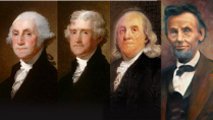


The concept of a third party is interesting. Neither of the two existing parties can fix the problems of this country today; neither seems willing or able to clearly (and fearlessly) even identify the problems. They are stifled by political correctness and blinded by their affiliations. They are deaf to the voices of the people. After the 2012 Presidential election, it seems clear that today's Republican Party in particular does not have the ability to re-brand itself as a party more acceptable to the electorate.
Grass-roots conservatives are aware that they are taken for granted by the Republican Party and thereby ignored. Their core beliefs are trampled upon. As a result, many stayed home rather than vote in 2012. They have come to realize that the Republican Party does not represent them.
A Ron Paul or a Gary Johnson is not the answer. That has been tried, and it failed. Rather than having a fringe group leader emerge and then have a small minority of voters coalesce around him/her, a viable third party platform must be formed, and then a leader chosen that best represents that platform. That way the issues come first, rather than the popular appeal of an articulate candidate who has no chance of winning. The platform of a true conservative party could probably be pulled from within the present Republican Party platform, and would consist of many planks not being used by the present party establishment.
Interestingly, there are certainly also disgruntled Democrats, sick of the partisan bickering and gridlock in Washington, who can see that a possible workable new party is somewhere outside the two current major parties. The current party elites are ignoring them as well. Some of these might very well consider joining a new party (like the "Reagan Democrats") if they were convinced the party heard them and would represent them.
The chance of a successful third party developing into a force to be reckoned with is low, and I hold a skeptical realism as to its practicality. It would take millions of dollars, real independent leadership, and strong coalitions in all fifty states to be viable. But there are American voices that are crying out to be heard and are tired of being ignored while they are paying the salaries of those in office, and whose number seems to be increasing.
Third Party
Re: Third Party
 by mreill01 » Mon Nov 26, 2012 6:10 am
In reading over the previous post, I am reminded of the words found within the Declaration of Independence, crafted by our Founding Fathers...
" that whenever any Form of Government becomes destructive of these Ends, it is the Right of the People to alter or to abolish it, and to institute new Government, laying its Foundation on such Principles, and organizing its Powers in such Form, as to them shall seem most likely to effect their Safety and Happiness." Enough said.
" that whenever any Form of Government becomes destructive of these Ends, it is the Right of the People to alter or to abolish it, and to institute new Government, laying its Foundation on such Principles, and organizing its Powers in such Form, as to them shall seem most likely to effect their Safety and Happiness." Enough said.
Re: Third Party
by Jim » Tue Nov 27, 2012 7:36 pm
Were we not warned against political parties, by Thee founding father.
Re: Third Party
by Frank Jenkins » Thu Nov 29, 2012 11:25 am
The Nebraska Legislature is the supreme legislative body of the State of Nebraska, in the Great Plains region of the United States. The Legislature meets at the Nebraska State Capitol in the City of Lincoln, Lancaster County.
Nebraska's Legislature is unusual in that it is unicameral and nonpartisan. No other state in the U.S. has a single-chamber legislative body, although the legislatures of two U.S. territories—the Virgin Islands and Guam—are unicameral, as is the Council of the District of Columbia. At 49 members it is also the smallest state legislature (the next smallest is the 60-member bicameral Alaska Legislature).
Nebraska's Legislature is unusual in that it is unicameral and nonpartisan. No other state in the U.S. has a single-chamber legislative body, although the legislatures of two U.S. territories—the Virgin Islands and Guam—are unicameral, as is the Council of the District of Columbia. At 49 members it is also the smallest state legislature (the next smallest is the 60-member bicameral Alaska Legislature).
Re: Third Party
by Frank Jenkins » Thu Nov 29, 2012 11:42 am
Do we need Political Parties?
Would our country be better off if we had no political parties- just individuals running for public office against each other?
Would our country be better off if we had no political parties- just individuals running for public office against each other?
Interesting idea-however-it can spell the end of any kind of democracy.
When military dictators come to power, such as the late President Zia ul Haq of Pakistan, they abolish political parties. In fact, a one party state such as Nazi Germany or the USSR is a no-party state.
Gore Vidal famously said that ’the United States is a one party state with two right wings.’
I was quite shocked when I was a student when my American exchange professor said that he never voted in US elections as he felt he was endorsing a system which never gave him any real choices at all.
More crucially, compared to foreign governments, the US one is-according to European political scientists- much weaker than, say, European ones when it comes to withstanding pressure from big business.
American political theorist, Chalmers Johnson, in his book ’Blowback’ takes the argument a step further by saying that the US arms industrial complex is so eager to promote itself, or weapons sales, that it will, in effect, work against the foreign policy interests of the United States and the State Department.
Whether that is true or not, on a personal note, I spend my entire life in a classroom reading American literature, stories and poems, to English -and Turkish-children, and I am filled with something like despair at the dreadful political leadership in the US which is either irrelevant or just wrong-headed most of the time. Let me spare you the details save in this:
All the peoples of the western nations are going to have to pay higher taxes whatever any politician may tell us. We are going to have to accept lower wages as well, and be a whole lot more efficient. There is no other way of competing with the sort of people who produce quality goods on salaries of $2,000 a year or less. Our military budgets are going to have to be chopped back. We are being invaded with cheap shampoo and toy tanks now. Real tanks won't help much.
When military dictators come to power, such as the late President Zia ul Haq of Pakistan, they abolish political parties. In fact, a one party state such as Nazi Germany or the USSR is a no-party state.
Gore Vidal famously said that ’the United States is a one party state with two right wings.’
I was quite shocked when I was a student when my American exchange professor said that he never voted in US elections as he felt he was endorsing a system which never gave him any real choices at all.
More crucially, compared to foreign governments, the US one is-according to European political scientists- much weaker than, say, European ones when it comes to withstanding pressure from big business.
American political theorist, Chalmers Johnson, in his book ’Blowback’ takes the argument a step further by saying that the US arms industrial complex is so eager to promote itself, or weapons sales, that it will, in effect, work against the foreign policy interests of the United States and the State Department.
Whether that is true or not, on a personal note, I spend my entire life in a classroom reading American literature, stories and poems, to English -and Turkish-children, and I am filled with something like despair at the dreadful political leadership in the US which is either irrelevant or just wrong-headed most of the time. Let me spare you the details save in this:
All the peoples of the western nations are going to have to pay higher taxes whatever any politician may tell us. We are going to have to accept lower wages as well, and be a whole lot more efficient. There is no other way of competing with the sort of people who produce quality goods on salaries of $2,000 a year or less. Our military budgets are going to have to be chopped back. We are being invaded with cheap shampoo and toy tanks now. Real tanks won't help much.
You can't always get what you want
It’s not so much that we "need" them as that we get them whether we want them or not.
Each party is a collection of diverse, slightly overlapping interests that agree to work together. It can lead to some irrelevant bedfellows (why are the gun-rights and pro-life people the same party? Why is same party for minimum wage hikes and legalized marijuana?) but there’s usually some logic to it.
They’re stronger together then they are apart. "I’ll vote for your issues if you’ll vote for mine." Usually they’re not really voting against their interest when voting for the other guy’s bill but might otherwise remain neutral on it, while the "other party" contains the guys who are opposed.
Try this as a thought experiment: take your favorite party and disband it. The separate interest garoups will get massacred by the other party, and the old party will promptly re-form spontaneously.
Once in a very rare while an extremely rich person will try to run without the aid of a party. It rarely works, and never at the Presidential level. And it never, ever, ever works for poor people. If we eliminated parties, only people who could afford all the infrastructure that parties currently provide (experienced media managers, volunteer coordinators, mailing lists, etc) would win.
You can try banning the parties, but only by trampling on freedom of speech, freedom of association, and probably freedom of the press.
Local elections are often nonpartisan, usually because there aren’t any long-term social and theoretical alignments to work out. But even there, politicians tend to band together and work for each other’s interests. And they’re not always nonpartisan, because they’re sometimes used to "groom" candidates for higher office.
So parties end up being an inevitable fact of life. We can rail against it, but there’s not really anything we can do about it without costing even more freedom than we’d gain.
It’s not so much that we "need" them as that we get them whether we want them or not.
Each party is a collection of diverse, slightly overlapping interests that agree to work together. It can lead to some irrelevant bedfellows (why are the gun-rights and pro-life people the same party? Why is same party for minimum wage hikes and legalized marijuana?) but there’s usually some logic to it.
They’re stronger together then they are apart. "I’ll vote for your issues if you’ll vote for mine." Usually they’re not really voting against their interest when voting for the other guy’s bill but might otherwise remain neutral on it, while the "other party" contains the guys who are opposed.
Try this as a thought experiment: take your favorite party and disband it. The separate interest garoups will get massacred by the other party, and the old party will promptly re-form spontaneously.
Once in a very rare while an extremely rich person will try to run without the aid of a party. It rarely works, and never at the Presidential level. And it never, ever, ever works for poor people. If we eliminated parties, only people who could afford all the infrastructure that parties currently provide (experienced media managers, volunteer coordinators, mailing lists, etc) would win.
You can try banning the parties, but only by trampling on freedom of speech, freedom of association, and probably freedom of the press.
Local elections are often nonpartisan, usually because there aren’t any long-term social and theoretical alignments to work out. But even there, politicians tend to band together and work for each other’s interests. And they’re not always nonpartisan, because they’re sometimes used to "groom" candidates for higher office.
So parties end up being an inevitable fact of life. We can rail against it, but there’s not really anything we can do about it without costing even more freedom than we’d gain.
In a word: Yes!
A party is just an organization that helps individuals get elected. Every candidate has an organization. Even if we got rid of all the parties today, they'd appear in a blink of an eye. There are practical reasons for this.
In the US, we have the most mature democracy on the planet. Thus we have two parties. In the beginning, there were a ton of parties. You needed a score card, and it still didn't make sense. It was like every candidate was a unique individual, and you had no idea what their history really was.
New-born democracies often start with a dozen parties. In the first few years, these get reduced in half, as the little parties merge with larger parties that share a lot of their positions. These mergers happen for the same reason they happen in business: greater numbers equal more foot soldiers and more power in elections and more money raising, and greater efficiency.
The end of this party consolidation always comes when there are two parties in a democracy (one "party" in non-democracies). And these two parties tussle back and forth, each trying to claim their half, plus a little be more of the center, so they can win.
Inevitably, in this process, a lot of ideas get left out, as the parties seek to position themselves with the greatest chance of winning the coveted center. So people get angry, and in hoping to push their ideas, they try, again and again, to build third parties. These almost never take hold. And even if they do well in one election, their share of the vote has always plummeted in the next election.
So, if we outlawed the current parties, new parties would spring up out of the organizations of the next set of politicians. It's a nice dream. It will never happen as long as we have a democracy, and as long as enough people think elections matter.
A party is just an organization that helps individuals get elected. Every candidate has an organization. Even if we got rid of all the parties today, they'd appear in a blink of an eye. There are practical reasons for this.
In the US, we have the most mature democracy on the planet. Thus we have two parties. In the beginning, there were a ton of parties. You needed a score card, and it still didn't make sense. It was like every candidate was a unique individual, and you had no idea what their history really was.
New-born democracies often start with a dozen parties. In the first few years, these get reduced in half, as the little parties merge with larger parties that share a lot of their positions. These mergers happen for the same reason they happen in business: greater numbers equal more foot soldiers and more power in elections and more money raising, and greater efficiency.
The end of this party consolidation always comes when there are two parties in a democracy (one "party" in non-democracies). And these two parties tussle back and forth, each trying to claim their half, plus a little be more of the center, so they can win.
Inevitably, in this process, a lot of ideas get left out, as the parties seek to position themselves with the greatest chance of winning the coveted center. So people get angry, and in hoping to push their ideas, they try, again and again, to build third parties. These almost never take hold. And even if they do well in one election, their share of the vote has always plummeted in the next election.
So, if we outlawed the current parties, new parties would spring up out of the organizations of the next set of politicians. It's a nice dream. It will never happen as long as we have a democracy, and as long as enough people think elections matter.
I say no!
My preference would be to have no parties at all. To be a candidate, you get the designated number of signatures on a petition and run in a national primary. Public funding at a moderately low rate is provided--no personal funds can be used. Then the top 4 get additional public funding to run in the election. The whole process takes 4 months and literally anyone can run. Do away with the unnecessary conventions and all the backroom deal making. Time for a major overhaul of our system that will get rid of the choking influence of the rich ruling class in this country.
My preference would be to have no parties at all. To be a candidate, you get the designated number of signatures on a petition and run in a national primary. Public funding at a moderately low rate is provided--no personal funds can be used. Then the top 4 get additional public funding to run in the election. The whole process takes 4 months and literally anyone can run. Do away with the unnecessary conventions and all the backroom deal making. Time for a major overhaul of our system that will get rid of the choking influence of the rich ruling class in this country.
It's a good question.
There are certainly flaws in the dual party system and within each party. However I can't help thinking of The Federalist Papers (I think that's it. I'm pretty tired and the brain is firing slowly) in which there was some concern that this country would grow so large, with so many factions that there would be know method of balance and the sheer volume of different political movements would halt any progress. I would be concerned that with no parties to balance one another and consolidate efforts to enact laws and policies we might wind up stagnating with a whole lot of wonderful ideas but no real action in any direction. The flip side would be we would have a heck of a lot less, or at least smaller portions, of organized corruption.
There are certainly flaws in the dual party system and within each party. However I can't help thinking of The Federalist Papers (I think that's it. I'm pretty tired and the brain is firing slowly) in which there was some concern that this country would grow so large, with so many factions that there would be know method of balance and the sheer volume of different political movements would halt any progress. I would be concerned that with no parties to balance one another and consolidate efforts to enact laws and policies we might wind up stagnating with a whole lot of wonderful ideas but no real action in any direction. The flip side would be we would have a heck of a lot less, or at least smaller portions, of organized corruption.
Re: Third Party
by mreill01 » Mon Dec 03, 2012 4:32 am
Yes, indeed we were warned about political parties by our Founding Fathers. They were wise men, who created and organized a new government to the best of their abilities and with the realities of their time; still, they looked into the future and were able to anticipate difficulties that could possibly arise. One of these was the rise of powerful political parties.
James Madison- "A pure democracy can admit no cure for the mischiefs of faction..... There is nothing to check the inducements to sacrifice the weaker party."
John Adams- "There is nothing which I dread so much as a division of the republic into two great parties, each arranged under its leader, and concerting measures in opposition to each other. This, in my humble opinion, is to be dreaded as the greatest political evil under our Constitution."
Benjamin Franklin- "And of what kind are the men that will strive for this profitable preeminence, through all the bustle of cabal, the heat of contention, the infinite mutual abuse of parties, tearing to pieces the best of characters?"
George Washington, Farewell Address, September 17, 1796- "However political parties may now and then answer popular ends, they are likely in the course of time and things to become potent engines, by which cunning, ambitious, and unprincipled men will be enabled to subvert the power of the people and to usurp for themselves the reins of government, destroying afterwards the very engines which have lifted them to unjust dominion.
These visionary men could well be describing today's democrat and republican parties.
James Madison- "A pure democracy can admit no cure for the mischiefs of faction..... There is nothing to check the inducements to sacrifice the weaker party."
John Adams- "There is nothing which I dread so much as a division of the republic into two great parties, each arranged under its leader, and concerting measures in opposition to each other. This, in my humble opinion, is to be dreaded as the greatest political evil under our Constitution."
Benjamin Franklin- "And of what kind are the men that will strive for this profitable preeminence, through all the bustle of cabal, the heat of contention, the infinite mutual abuse of parties, tearing to pieces the best of characters?"
George Washington, Farewell Address, September 17, 1796- "However political parties may now and then answer popular ends, they are likely in the course of time and things to become potent engines, by which cunning, ambitious, and unprincipled men will be enabled to subvert the power of the people and to usurp for themselves the reins of government, destroying afterwards the very engines which have lifted them to unjust dominion.
These visionary men could well be describing today's democrat and republican parties.
6 posts
• Page 1 of 1
